
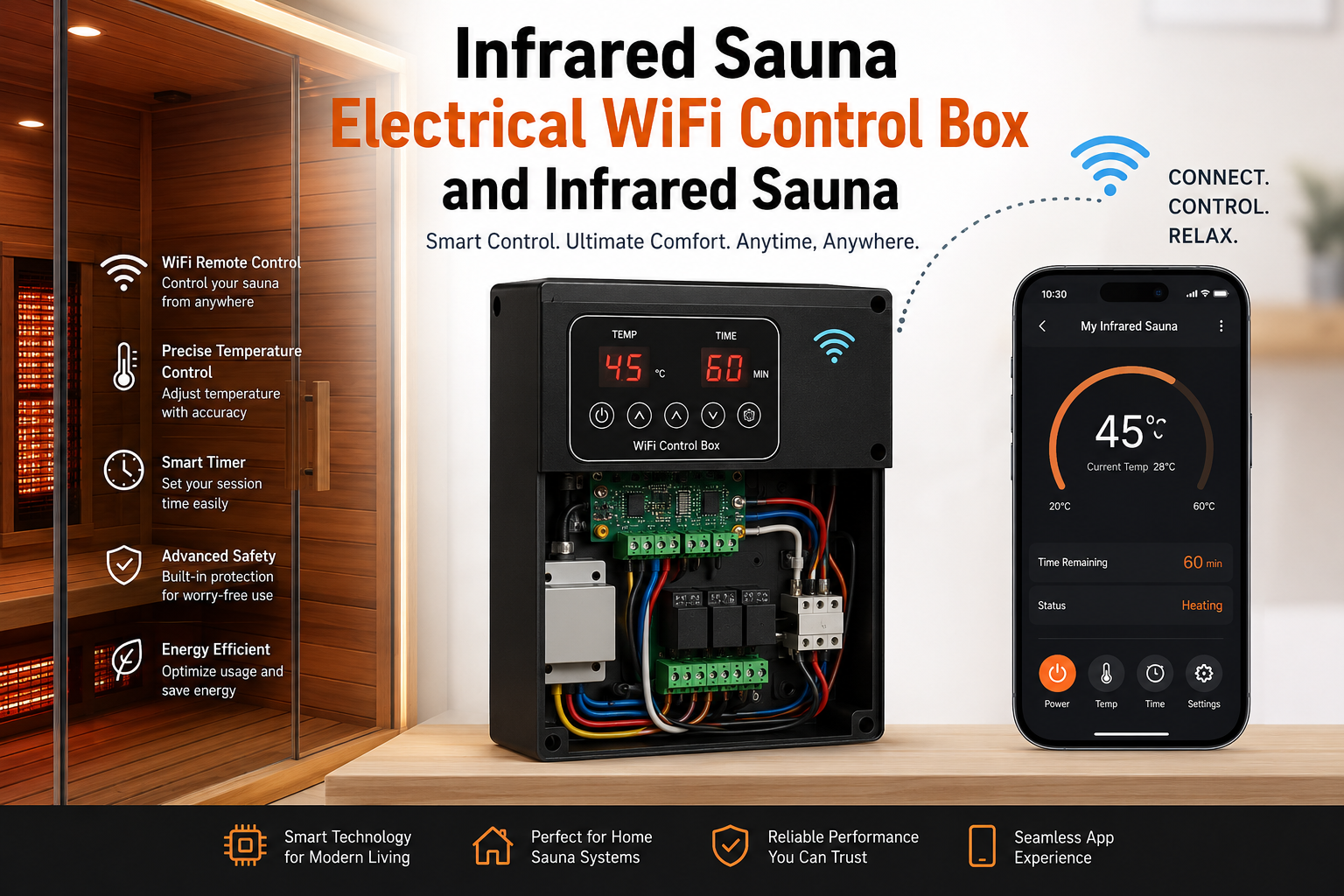
Introduction of Infrared Sauna Electrical WiFi Control Box:
Modern infrared saunas have evolved far beyond simple heat rooms. Today’s smart sauna systems include advanced electrical WiFi control boxes that allow users to monitor and control their sauna remotely from a smartphone or tablet.

An Infrared Sauna Electrical WiFi Control Box acts as the central brain of the sauna. It manages heating panels, temperature settings, timers, safety features, and wireless connectivity.
Whether you are building a new infrared sauna, upgrading an existing unit, or troubleshooting a smart controller, understanding how these systems work can improve performance, safety, and convenience.
What You’ll Learn
- What a WiFi sauna control box is
- How infrared sauna electrical systems work
- Benefits of smart sauna technology
- Installation requirements
- Safety considerations
- Troubleshooting common issues
- Future trends in connected sauna systems
What Is an Infrared Sauna Electrical WiFi Control Box?
Quick Definition
An infrared sauna electrical WiFi control box is a central electronic control unit that regulates heating elements, monitors temperature, manages timers, and enables wireless remote control through a smartphone application.
Unlike traditional manual controllers, WiFi-enabled systems offer real-time monitoring and remote adjustments.
Core Components
A typical control box contains:
- Power distribution board
- Temperature sensors
- WiFi communication module
- Digital processor
- Safety relays
- Timer controls
- User interface connections
These components work together to create a seamless sauna experience.
How an Infrared Sauna Electrical System Works
The electrical system controls how power flows from your home’s electrical supply to the infrared heating panels.
Step-by-Step Process
- Power enters the control box.
- The controller verifies system status.
- Temperature sensors provide real-time feedback.
- The processor regulates heat output.
- WiFi connectivity enables remote control.
- Safety systems monitor operating conditions.
Main Electrical Components
| Component | Function |
|---|---|
| Control Box | System management |
| Heating Panels | Heat generation |
| Temperature Sensor | Monitoring |
| Power Relay | Switching power |
| WiFi Module | Remote connectivity |
| Timer Circuit | Session control |
Benefits of a WiFi Sauna Controller
Smart sauna technology provides significant advantages.
Remote Preheating
Users can warm the sauna before entering.
Benefits include:
- Time savings
- Improved convenience
- Better scheduling flexibility
Precision Temperature Control
Digital systems maintain more accurate temperatures than manual controls.

Enhanced Monitoring
Many systems provide:
- Real-time status updates
- Temperature alerts
- Session history
- Usage statistics
Smart Home Integration Possibilities
Modern controllers increasingly integrate with smart home ecosystems.
Examples include:
- Voice control functionality
- Automated wellness routines
- Mobile app notifications
- Energy management systems
As smart homes continue to expand globally, sauna connectivity is becoming an expected feature.
Infrared Sauna Electrical Safety Requirements
Safety remains the highest priority.
Essential Safety Features
Every quality control box should include:
- Overheat protection
- Automatic shutdown
- Ground fault protection
- Surge protection
- Sensor monitoring
Common Installation Mistakes
Avoid:
- Incorrect wire sizing
- Poor ventilation around electronics
- Improper grounding
- Overloading circuits
- Ignoring manufacturer instructions
WiFi Sauna Controller Installation Guide
Installation Steps
- Disconnect power.
- Mount the control box securely.
- Connect heating panel wiring.
- Install temperature sensors.
- Configure WiFi settings.
- Test all safety systems.
- Verify app connectivity.
Professional installation is recommended for complex systems.
Common WiFi Control Box Problems and Solutions
Sauna Not Connecting to WiFi
Possible causes:
- Weak signal strength
- Incorrect password
- Router compatibility issues
- Firmware updates required
Temperature Reading Errors
Check:
- Sensor placement
- Wiring integrity
- Sensor calibration
Controller Not Powering On
Inspect:
- Circuit breaker
- Power supply
- Internal fuse
- Wiring connections
Energy Efficiency and Cost Savings
Smart control systems improve energy management.
Industry studies indicate that programmable heating systems can reduce unnecessary energy consumption by preventing idle heating periods.
Energy-saving features include:
- Scheduled startup
- Automatic shutdown
- Usage tracking
- Temperature optimization
Future Trends in Smart Infrared Sauna Technology
Emerging innovations include:
- AI-powered heat optimization
- Predictive maintenance alerts
- Voice assistant integration
- Advanced health tracking
- Cloud-based monitoring
The wellness technology market continues to expand rapidly, making smart sauna systems increasingly sophisticated.
Expert Recommendations Before Buying
Consider the following factors:
Compatibility
Ensure the controller supports:
- Your heater type
- Voltage requirements
- Existing wiring
Safety Certifications
Look for:
- UL certification
- CE certification
- ETL listing
Software Support
Choose manufacturers that provide:
- Firmware updates
- Technical support
- Reliable mobile applications
Conclusion
An Infrared Sauna Electrical WiFi Control Box and Infrared Sauna system transforms a traditional sauna into a connected wellness experience. By combining intelligent temperature management, remote access, advanced safety features, and energy-efficient operation, modern WiFi-enabled controllers deliver greater convenience and control than ever before.
Whether upgrading an existing sauna or designing a new installation, investing in a high-quality smart control system can significantly improve performance, comfort, and long-term reliability.
FAQ Section
1. What does an infrared sauna control box do?
It regulates temperature, timers, heating elements, and safety functions.
2. Can I control my infrared sauna from my phone?
Yes, WiFi-enabled controllers allow remote operation through mobile apps.
3. Is a WiFi sauna controller safe?
Yes, when installed correctly and equipped with proper safety protections.
4. How long do sauna control boxes last?
Most quality units last 8–15 years with proper maintenance.
5. Do WiFi controllers save energy?
Yes, scheduling and automation reduce unnecessary heating time.
6. Can I upgrade my existing sauna controller?
Many infrared saunas support compatible controller upgrades.
7. What voltage do sauna control boxes require?
Common systems operate on 120V or 240V depending on model.
8. Why won’t my sauna connect to WiFi?
Signal issues, router settings, or outdated firmware are common causes.
9. Do I need professional installation?
Professional installation is recommended for safety and code compliance.
10. Can smart controllers integrate with smart homes?
Many modern systems support smart home connectivity features.
11. How often should sensors be inspected?
At least once annually.
12. What safety features are essential?
Overheat protection, automatic shutoff, and surge protection.
13. Can a control box improve sauna performance?
Yes, precise regulation improves heating consistency.
14. What maintenance is required?
Regular inspection of wiring, sensors, and software updates.
15. Are replacement control boxes available?
Yes, most manufacturers offer replacement units.